Hope: Our Best Strategy

“Keep your face always toward the sunshine—and shadows will fall behind you." – Walt Whitman
Hope.
A small word with a big impact.
It’s easy to understand why people are struggling to feel hopeful in today’s world—a world that can feel chaotic, heavy, and overwhelming.
Lately, in conversations with friends and folks in my community, I’ve noticed that hope seems to be missing from the conversation. Many people are feeling cynical or sad, finding it increasingly difficult to hold onto hope as fear and uncertainty about the future take hold.
Have we given up hope? Are we convinced that all is lost—that we’ve gone too far down the black hole of corrupt governments, environmental crises, inequitable economies, and challenges to our air, water, and food supply?
Do we feel doomed?
What Hope Gives Us
I remember when we were only about a month into the pandemic and the divisiveness over mask-wearing was already on full display. I recall posting this message to my family thread on WhatsApp:
“I believe in our scientists, our medical professionals, and in the human spirit. I believe we will come together and collectively lead the way in developing a cure or a vaccine that will help get us out of the death and illness spiral quickly.”
Some would call that hope. Others might call it optimism or positivity. Whatever term we use, we need to recognize its power.
Every day, people all over the world carry hope. Whether they’re living in a war zone, battling illness, experiencing hate or oppression, or simply struggling through hard times, somehow they continue to hold onto the possibility of a better tomorrow.
Hope can give us the strength to hang in there—to keep going when circumstances are difficult.
The Cost of Hopelessness
Conversely, hopelessness can take a tremendous toll on our well-being. It can affect how we live, work, connect with others, and imagine our future.
When we lose hope, it can become harder to recognize our strengths, talents, and potential. We may disengage from work, withdraw from relationships, or become apathetic and jaded about our goals.
Why bother? It’s pointless.
Worst of all, we may begin to abandon our dreams of a better and brighter future. And sadly, hopelessness can feed more hopelessness.
We need to break that cycle and reclaim possibility.

“I don’t think of all the misery, but of the beauty that still remains.” – Anne Frank
Some of the more cynical among us dismiss hope as burying our heads in the sand, refusing to accept reality, or simply waiting in vain for things to get better.
But I much prefer this description of hope from Thema Bryant, PhD, former president of the American Psychological Association:
“Hope isn’t a denial of what is, but a belief that the current situation is not all that can be. You can recognize something’s wrong, but also that it’s not the end of the story.”
That distinction is important.
Hope doesn’t require us to ignore reality. Instead, it allows us to acknowledge what is difficult while remaining open to the possibility that things can change.
Research on hope also suggests that reconnecting with a sense of possibility can support positive change—in ourselves and in our relationships with others.
Hope allows other possibilities to enter the story.
Hope Is a Strategy
There’s an old business phrase I heard mentioned a few times during my career:
“Hope is not a strategy.”
It sounds cool and catchy, but in my opinion, it’s simply business jargon—often used to introduce difficult changes such as cost-cutting initiatives and job layoffs.
The message behind the expression is that hope isn’t enough; we need a plan and the willingness to act.
Fair enough.
But I’m here to tell you that hope can actually be part of a very smart strategy.
Psychologist C. Rick Snyder, PhD, conducted extensive research on hope beginning in the 1980s. He and his colleagues contributed significantly to the study of hope within positive psychology. One of the central ideas in his work was that hope involves both the ability to identify pathways toward our desired goals and the agency—the motivation and belief in our ability—to pursue those pathways.
Essentially: Where there’s a will, there’s a way.
What other options can you see? And how willing are you to act on them?
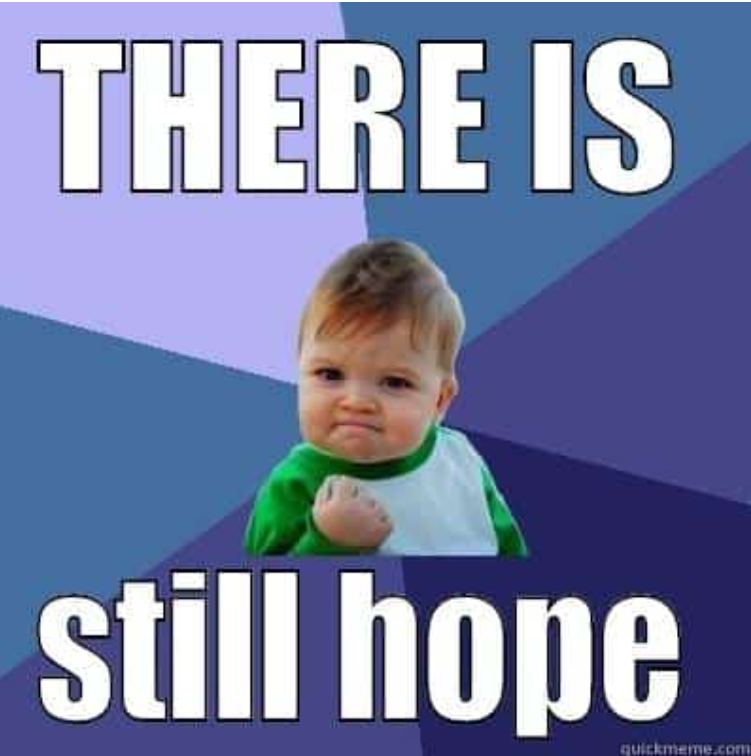
“The best way to not feel hopeless is to get up and do something. Don’t wait for good things to happen to you. If you go out and make some good things happen, you will fill the world with hope, you will fill yourself with hope.” – Barack Obama
Learning to Hope
Great news: Hope is a skill that can be learned.
Cultivating hope as a mindset can help us build resilience in the face of adversity. When we believe that a better future is possible, we may be better able to navigate the struggles of today.
Years ago, I worked as a career transition counselor, running group workshops for individuals who had lost their jobs following the 9/11 attacks and the subsequent economic fallout.
It was an intense time of fear and uncertainty, so you can imagine the feelings of despair and hopelessness that filled the conference room.
I would begin each workshop with a powerful activity designed to help participants reframe their perspectives. I instructed them to think of a difficult change they had experienced in the past—for example, the loss of a loved one, a divorce, or an accident—and then recall how they had gotten through it.
Almost every participant acknowledged that, at the time, the event had seemed like the end of their world. Yet, in hindsight, many could identify ways they had grown, adapted, or ultimately found a positive path forward.
That shift in perspective was huge.
It helped participants move from an overwhelming sense of loss:
“I feel hopeless that I’ll be able to find another job in this tough market. How will I support my family?”
…to a much more hopeful outlook:
“I’ve survived and even thrived after that experience, so I know I have the tools and resources to overcome this change, too.”
Workshop participants could then leverage this new mindset throughout the day by creating pathways toward their goal of finding new employment and taking concrete actions such as building résumés, networking, and practicing their interviewing skills.
They might not have realized it, but they were already practicing hope.
They were taking action based on the belief that growth and change were possible.
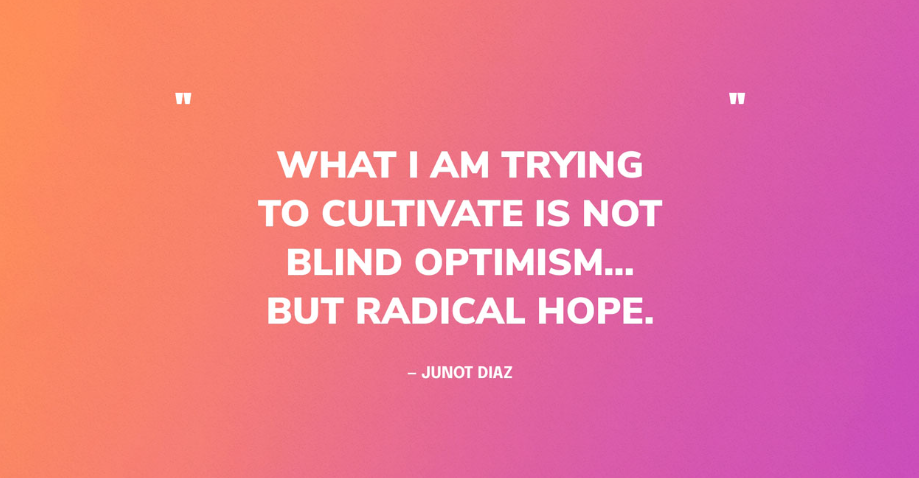
They say a person needs just three things to be truly happy in this world: someone to love, something to do, and something to hope for. – Tom Bodett
A Shift in Perspective
Often, our personal growth comes from life’s challenges. Through difficulty, we have opportunities to develop resilience, learn to pivot, and carve new paths.
Perspective is a key ingredient in finding hope.
We can acknowledge what is difficult without allowing it to define what we believe is possible.
Ironically, as soon as I decided that hope would be the subject of my next article, I received a fundraising appeal from City of Hope, one of the top cancer treatment and research organizations in the country.
I can’t think of a better name for their mission of care.
Hope reminds us that we can face difficulties and get through uncertain times while maintaining a belief in possibility.
Rather than falling into apathy or despair, we can reclaim our agency, look for pathways forward, and trust that change is possible.
Hope doesn’t promise that everything will be okay.
It reminds us that the story isn’t over. We have the ability to write a better one.
With love and laughter,
Annie @The Positive People Project. 🌞
Please don’t forget to opt in for positivity, and be sure to check your spam and/or Promotions (Gmail) folders! 👍
And, of course, remember to laugh and smile as often as possible! 😊